Free courtyards to visit in Milan, from Sforza Castle to Palazzo Morando
Walk through the courts of Sforza Castle and two historic palaces, with opening hours and transport stops.
Jump to what you need
- Three courtyards without an admission charge
- Sforza Castle, start in the Courtyard of Arms
- In the Rocchetta, look for shields under the portico
- The Ducal Court and its elephant
- Walk from Piazza Castello to Palazzo Moriggia
- Use the museum hours for Palazzo Moriggia
- Palazzo Morando, behind Via Sant’Andrea
- One detail to compare at each stop
- Put the palaces first if you start late
Three courtyards without an admission charge
Start at the Sforza Castle in Piazza Castello, walk on to Palazzo Moriggia at Via Borgonuovo 23 and finish at Palazzo Morando at Via Sant’Andrea 6. The castle courtyards are free every day from 7 a.m. to 7:30 p.m. The other two are on the entrance routes to free civic museums. Both museums open Tuesday to Sunday from 10 a.m. to 5:30 p.m., with last admission at 5 p.m. To see all three sites on one day, start at the castle in the morning and reach the palaces before 5 p.m. On Mondays, the castle courtyards make a walk on their own. If you use public transport, the standard ATM Mi1–Mi3 ticket costs €2.20.
Sforza Castle, start in the Courtyard of Arms
Take the M1 to Cairoli and walk to Piazza Castello. The Filarete Tower marks the main entrance. Once in the Courtyard of Arms, walk across and turn round to see how the tower relates to either wing of the fortress. Look at the width of the courtyard and compare it with the smaller passages into the inner courts. If you are with children, ask them to find two different towers and choose a spot from which to photograph them. From the M2, you can get off at Lanza and walk to the castle from there. The courtyard walk can be done on days and at times when the castle museums are closed.
In the Rocchetta, look for shields under the portico
From the Courtyard of Arms, follow the signs to the Rocchetta Courtyard. The high external walls and the arcades inside show how different this space is from the large entrance court. Under the arches, look at the capitals and see if you can distinguish the Visconti and Sforza emblems from the crescent motifs on other capitals. Choose two and move close enough to compare their shapes. The Rocchetta connects to the Ducal Court by a 15-metre ramp. The slope ranges between four and ten per cent. If you need a gentler route, check the access details before choosing your way between the courts.
The Ducal Court and its elephant
The Ducal Court led into the residential part of the castle. Look for the Elephant Portico, designed by Benedetto Ferrini in the fifteenth century. Its name comes from a fresco. First look from across the court to see where the portico sits, then approach it and find the figure. Each of the castle courts gives you a different view of how the complex worked. The entrance court shows the size of the fortress. The Rocchetta shows how a smaller area could be enclosed inside it. The Ducal Court introduces the residential spaces. You can see all three without buying an admission ticket. The castle museums have their own opening hours and a full-price ticket of €10. The video in Italian Sign Language introduces the building’s history.
Source: Castello Sforzesco di Milano ↗
Walk from Piazza Castello to Palazzo Moriggia
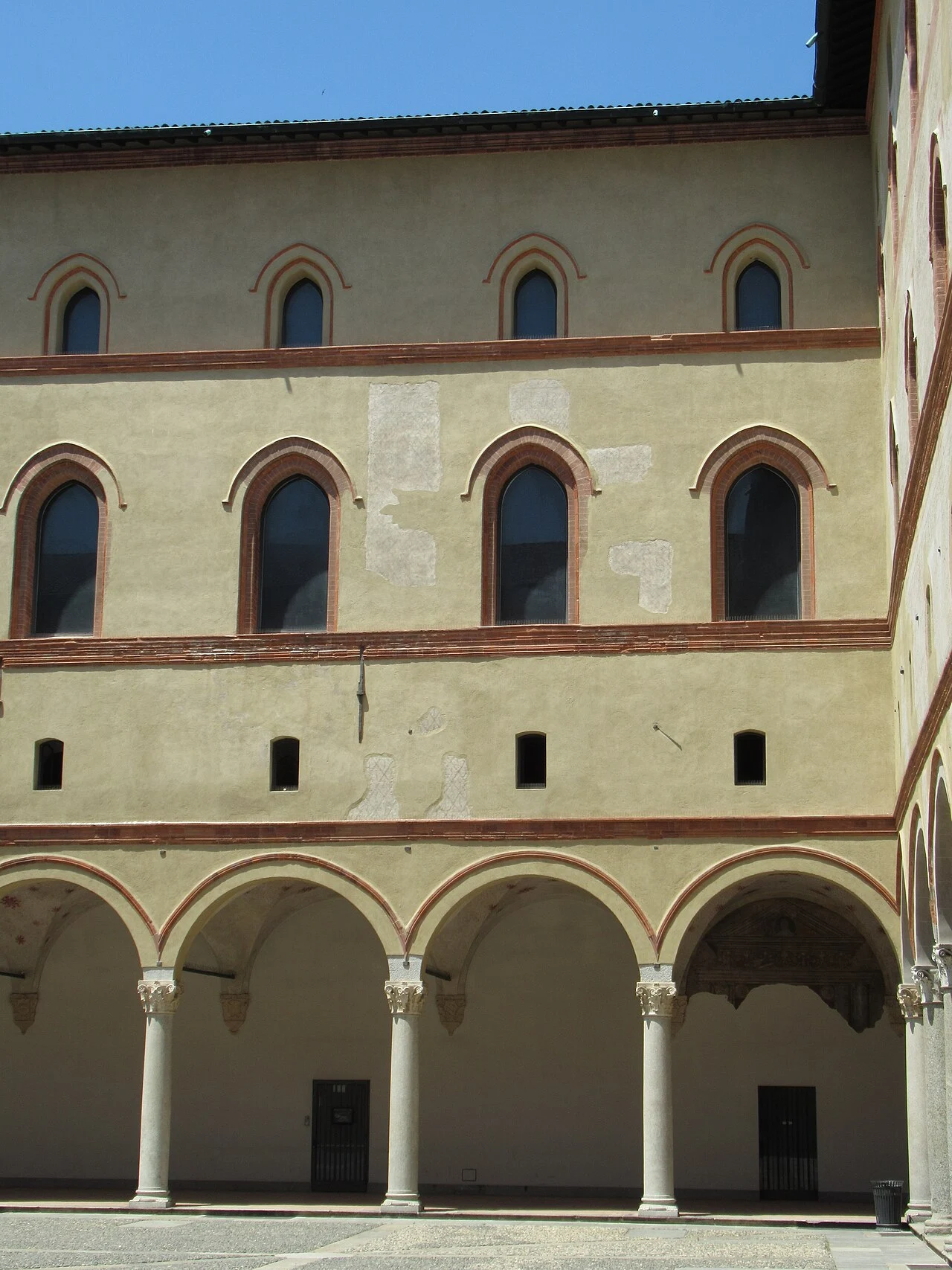
Leave the castle on the city side and reach Via Brera by way of the Via Cusani area. Continue to number 23 Via Borgonuovo. Palazzo Moriggia houses Milan’s Risorgimento Museum. The street entrance leads into the arcaded courtyard, which you cross to reach the museum. Stop just after the entrance and see how the light changes under the arches. Giuseppe Piermarini designed the eighteenth-century palace. After the fortified courts of the castle, here you can follow the transition from street to house through a doorway and a portico. If you start your walk at this stop, look for Lanza M2 or Montenapoleone M3, depending on where you are coming from.
Use the museum hours for Palazzo Moriggia
On a regular visit, use the museum hours to get to the court. Come Tuesday to Sunday from 10 a.m. to 5:30 p.m., with last admission at 5 p.m. Admission is free, so you can see the courtyard and decide on the spot whether to continue inside. If you are coming as a group or for an organised activity, check the conditions for that visit before leaving. With only a few minutes, stand on the opposite side of the courtyard from the entrance and look back to see how the doorway frames the street. Leave the route from the door to the museum clear for other visitors.
Palazzo Morando, behind Via Sant’Andrea
From Via Borgonuovo, use Via Manzoni and Via Monte Napoleone to reach number 6 Via Sant’Andrea. Go through the museum entrance to the main courtyard. From there a staircase leads to the rooms, which can also be reached by lift. Before going up, see how the courtyard and staircase guide visitors into the palace. The museum tells the visual story of Milan and rotates clothing and accessories from the civic costume and fashion collection. Ordinary admission is free and there is no ticket to collect. Come Tuesday to Sunday from 10 a.m. to 5:30 p.m., arriving before 5 p.m. San Babila, served by the M1 and M4, is a good stop for the return trip. Montenapoleone M3 is another option.
One detail to compare at each stop
At the castle, look for the difference between the side passages and the entrance facing the square. At Palazzo Moriggia, compare what you see from the doorway with the view from the far side of the courtyard. At Palazzo Morando, see where the staircase begins in relation to the entrance. If you enjoy drawing, sketch three simple plans, with a mark for the door, the courtyard and the way out. For a slower walk, begin with the building closest to your station and keep the castle as a separate stop. The castle map and its easy-to-read guide let you pick a court before you arrive.
Put the palaces first if you start late
With a morning free, do the castle first and then walk to the palaces. If you set off later, start at Morando and Moriggia ahead of last admission and save the castle courtyards for the end. If you only have time for one stop, use the museums’ hours for both palaces even if you intend to see only the courtyard. At the castle you can visit the open courts while the museums are closed. Save the addresses and check for temporary changes before you go. If you need a lift, check the metro stations individually. Leave time to stop at each entrance and see what changes as you pass from a busy street into a courtyard.
SOURCES AND FURTHER READING
- Castello Sforzesco · Orari e biglietti
- Castello Sforzesco · Cortili
- Castello Sforzesco · Mappa / Map / Plano
- Castello Sforzesco · Guida in lettura facilitata
- Castello Sforzesco · Accessibilità
- Palazzo Moriggia
- Palazzo Moriggia · Cortile
- Palazzo Morando · Orari e fermate
- Palazzo Morando · Cortile
- ATM · Mi1–Mi3
- ATM · ISB
- The history of Sforza Castle in Italian Sign Language
Did this story touch your heart?
Psst… you’ll like this too!
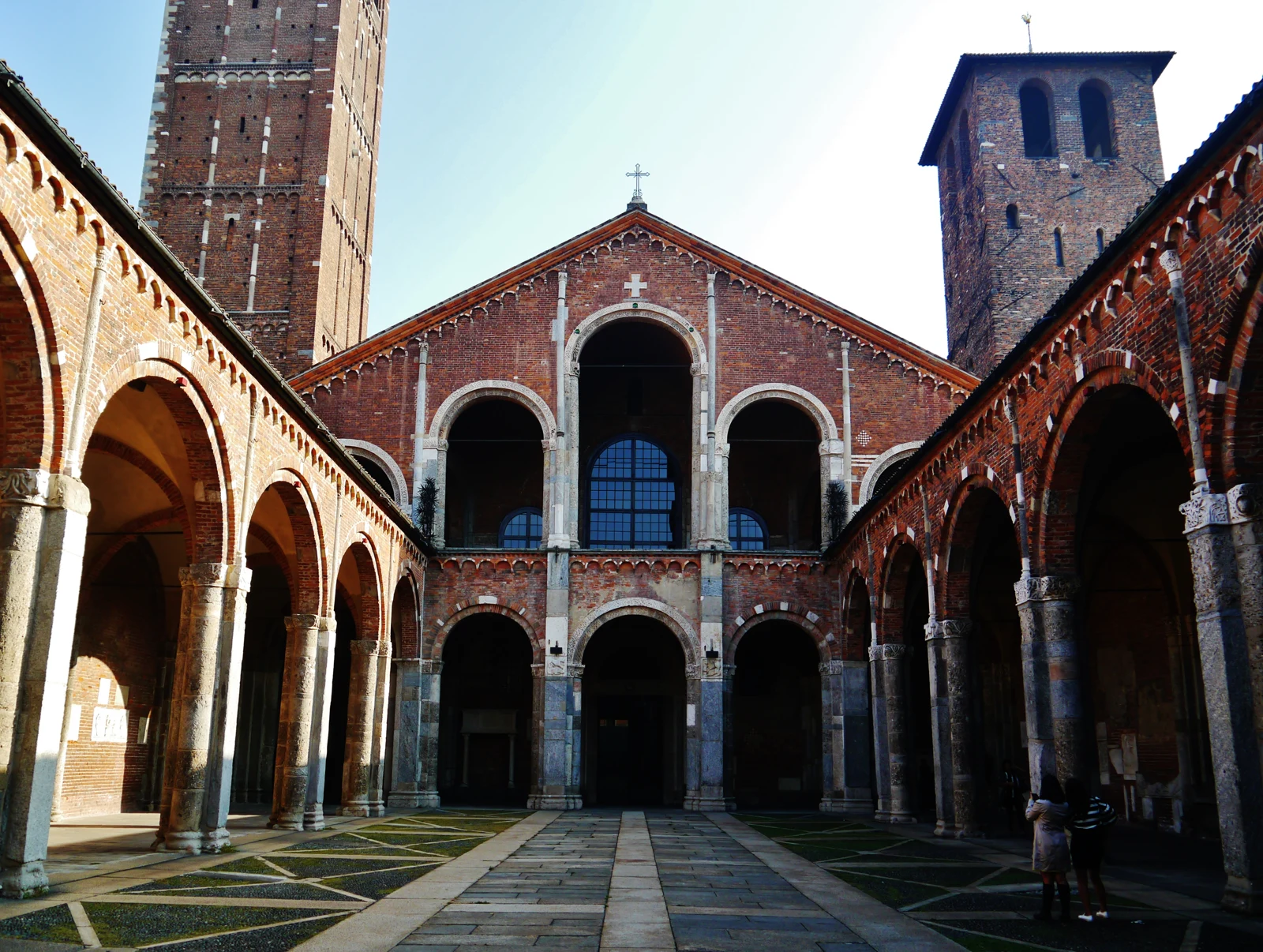
Five Milan churches to visit for free, from Saint Ambrose to the Magi
Read the story ↗Share this story