At CityLife, there’s a sky you look down to see
At CityLife you can cross a stone sky on the way to the metro. The stars are set into Piazza Alberto Burri, where a free walk through the park’s artworks begins.
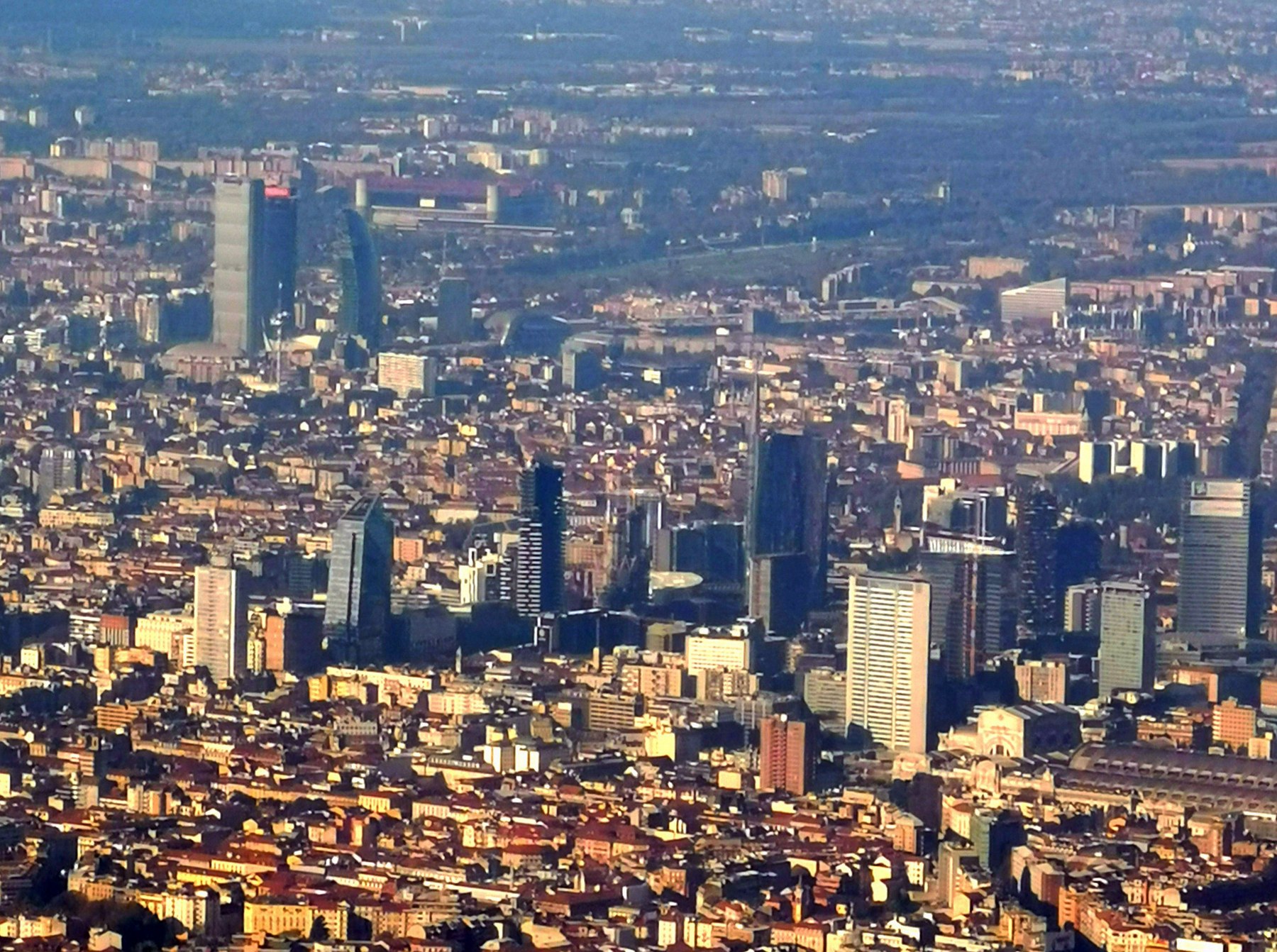
The stairs from Tre Torri M5 bring you to Piazza Alberto Burri, where Matteo Rubbi put stars in the paving. The ArtLine works are outdoors, free and open without booking. On a short break, you have time for the stars and the world drawn under “Coloris”. If you walk in, entrances to CityLife park include Piazza Giulio Cesare, Viale Cassiodoro and Viale Berengario. The CityLife map helps once you go further into the paths. The metro fare is separate if you take it.
The works begin where you are walking
Matteo Rubbi set more than a hundred stone stars where people walk every day. Their arrangement evokes the spring sky of 600 BC, the time the legend of Belloveso places Milan’s founding. You might notice one as you cross the square. The second is what tells you there’s a drawing under your feet.
Belloveso’s name puts the sky in the context of a story Milan tells about its beginnings. You can come across the stars first, then read the title and find a time long before the towers under your feet. People pass between them on their way home from work. The piece can sit in the middle of an ordinary journey, and the square goes on doing what squares do.
A world map lies in the concrete beneath the poles of “Coloris”. Pascale Marthine Tayou’s poles range from six to twelve metres and carry egg-shaped forms. Those are what catch your eye from a distance. At the edge you can follow the outline of the continents and walk between the elements of the work. In Rubbi’s square you walk across the drawing of an ancient sky. Here the same movement brings you to the much longer journeys made by people, objects and ideas.
With Judith Hopf’s work you might meet the hand or the foot first. The foot rests on the ground. The open hand stands upright, as if someone were waving. They’re the two parts of “Hand and Foot for Milan”, along the paths of the park. The distance between them matters. After seeing one gesture, you walk a short way looking for the other part of the body. The map can help you find it.
Both sculptures are built from bricks. You can still recognise the small units in a foot on the scale of something you might expect to find in a playground. The Riva kiln made the bricks for the work. Look at the hand from the side and follow one of the rows up towards the curve of the fingers. A material that normally gives buildings their shape has been made to hold an everyday gesture. It’s worth getting close enough to make out the contribution made by the individual pieces.
A neighbourhood that changed scale
A house can look whole as long as you’re standing on the right side. In Adrian Paci’s “Rudere”, the outline changes as you take the path and spaces open where the first view looked solid. In the details there are echoes of rose windows and the marble of Romanesque churches. The towers behind it give you a sense of its size without measuring anything. It’s one of the works you understand because you’re moving as you approach it.
Near the exit, the map of the CityLife fountains lets you add one of Serena Vestrucci’s designs and fill your water bottle. Follow signs for the M5 or leave towards Piazza Giulio Cesare. If that’s where you came in, you can save the stars for the last stop.
The park occupies part of the site of Milan’s former trade fair. One landmark that remains is Palazzo delle Scintille, a much lower building than the towers. Look for Maurizio Nannucci’s words, “New Times for Other Ideas / New Ideas for Other Times”, on its front as an extra stop if you pass that way. Once you locate the building on the map, use it to check which side of the park you came from and which paths will take you back to Tre Torri.
If you’re coming through different entrances, Piazza Alberto Burri is a more precise place to meet than “at the towers”. There’s already something to look for together in the square. Once everyone’s there, the walk can begin with a single one of Rubbi’s stars.
SOURCES AND FURTHER READING
Did this story touch your heart?
Psst… you’ll like this too!
In Ortica, Jannacci’s Milan and Ambrosoli’s share a street
Read the story ↗Share this story