THEY'RE NOT JUST SHOES! IN PRATO, TRAINERS TELL A CENTURY OF STORIES
From Michael Jordan’s court to the catwalk, Back to the Future and new materials: Sneaker Revolution reveals the seven lives of an iconic shoe.
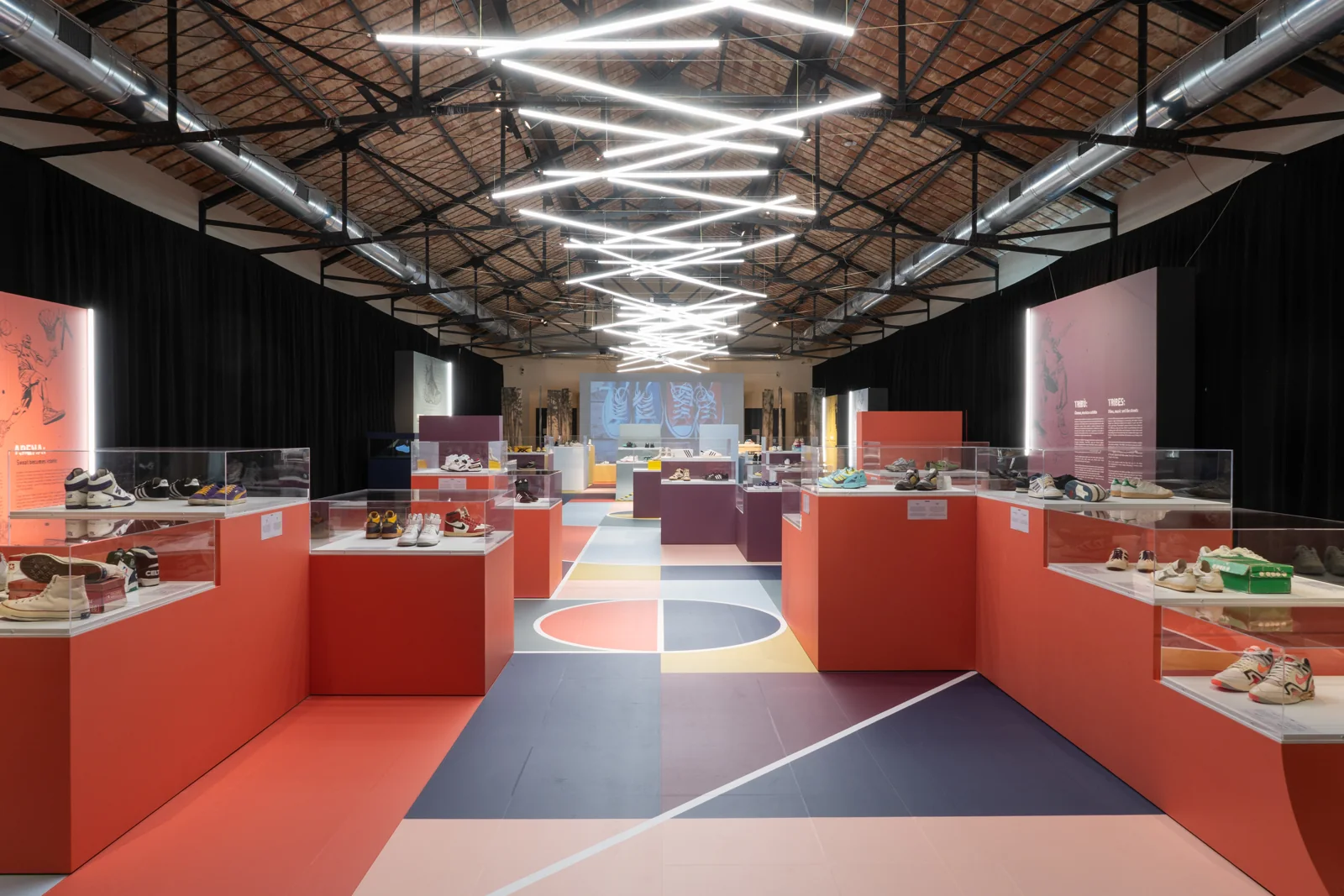
SNEAKER REVOLUTION · 6 NOVEMBER 2026 TO 2 MAY 2027. Museo del Tessuto, Via Puccetti 3, Prato, Italy. Tuesday to Thursday 10 am–3 pm; Friday and Saturday 10 am–7 pm; Sunday 3–7 pm; closed Monday. Full admission is listed as €10; check concessions and booking arrangements before travelling. Curated by Arianna Sarti and Francesca Biagioli, this exhibition moves through seven sections and roughly one hundred historic and contemporary trainers.
Think about a pair of trainers you cannot bear to throw away. Perhaps you bought them for a holiday, your first day at a new job or simply because you adored the colour. Sneaker Revolution at Prato's Museo del Tessuto begins with an idea that feels surprisingly personal: a shoe is never just something you wear on your feet. It can hold the memory of a song, a sporting hero, a friendship or the first time you felt happy dressing exactly as you wished.
Comfort was a small revolution
The Genesi section takes visitors back to the beginnings of practical sports footwear. Rubber soles and new constructions changed the way people could move. One historic example is a women's Regent Keds sports boot from around 1920. Look at it while imagining how different women's everyday lives and wardrobes were a century ago. Today we can wear trainers with jeans, flowing dresses or tailored outfits in many settings, but comfort was not always considered a natural part of women's fashion.
That is the first surprise of the visit. A flexible shoe can tell a story about the body and personal freedom. Fashion has too often encouraged women to accept discomfort as the price of being stylish. Nobody needs to reject beautiful footwear to value comfort. The interesting thing is having a choice, rather than being told which shoes are appropriate regardless of how they feel after several hours of walking. A simple sole can stand for a much larger change in everyday expectations.
The athletes who made shoes unforgettable
The Arena section moves through basketball courts, tennis matches and running tracks. Models from Converse, adidas, Nike, Puma and other brands show how technical footwear became familiar far beyond sport. Names such as Michael Jordan, Larry Bird, Stan Smith and Andre Agassi are part of this story. You do not have to remember every championship score to recognise the influence of an athlete whose shoes made young fans dream. A trainer could suddenly suggest confidence, determination and membership of a wider sporting community.
Outside the speed of a game, you can notice details you might otherwise miss: stitching, cushioning, shapes and colours. Each feature reflects a purpose, yet it can also create a trend. When a shoe leaves the changing room and enters school corridors, its meaning changes. It becomes something to desire and talk about with friends. That transformation connects personal memories with popular culture, even for visitors who have never played competitive sport or followed an entire tournament.
Tribes, music and the streets
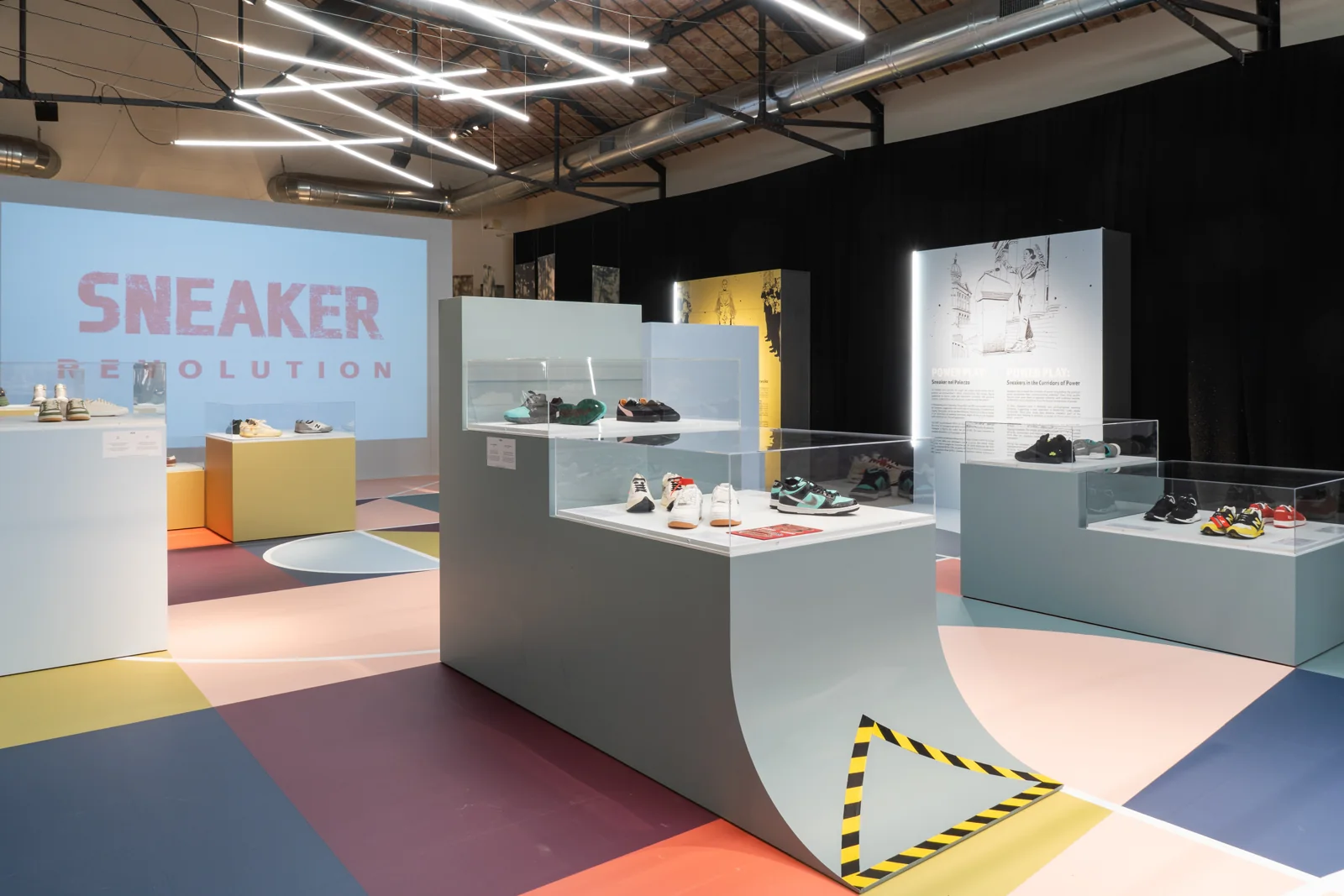
In Tribù, trainers move into skateboarding, hip-hop, punk, films and music videos. They become signs of identity as much as useful shoes. Some groups adopt a particular design because it makes them feel connected; others personalise their pairs to show their individuality. Both choices express the wish to belong somewhere while remaining recognisable as a person. Cinema also contributed to the mythology, and designs associated with Back to the Future demonstrate how even fictional footwear can stay in the public imagination for decades.
This is a wonderful part of the show to share with friends or family. A pair of shoes may remind one person of a first concert and another of a favourite childhood film. The same model can evoke entirely different memories. Look closely and ask yourself what you wore when you were a teenager, which songs accompanied you and whose style you wanted to imitate. An exhibition can become an unexpected conversation about the people we once were.
The price of wanting something
The Hype Cycle explores limited editions, sought-after launches, collecting and resale. A pair of trainers can become worth far more than its original retail price, especially when supplies are restricted. But are we paying for craftsmanship or for the feeling of owning something that others cannot obtain? The answer can be complicated. Collecting may be a sincere passion; social media pressure can also turn an enjoyable interest into a competition where there is always a more expensive object to chase.
It is worth talking about this without lecturing younger visitors. You can love the design of a shoe and choose not to buy it. You can recognise the creative work behind an item without using its cost to judge the person wearing it. Being able to say 'I like it, but it isn't right for me' is another kind of fashion freedom. A shoe might be rare and beautiful, yet it should never determine somebody's self-worth.
From the street to the runway
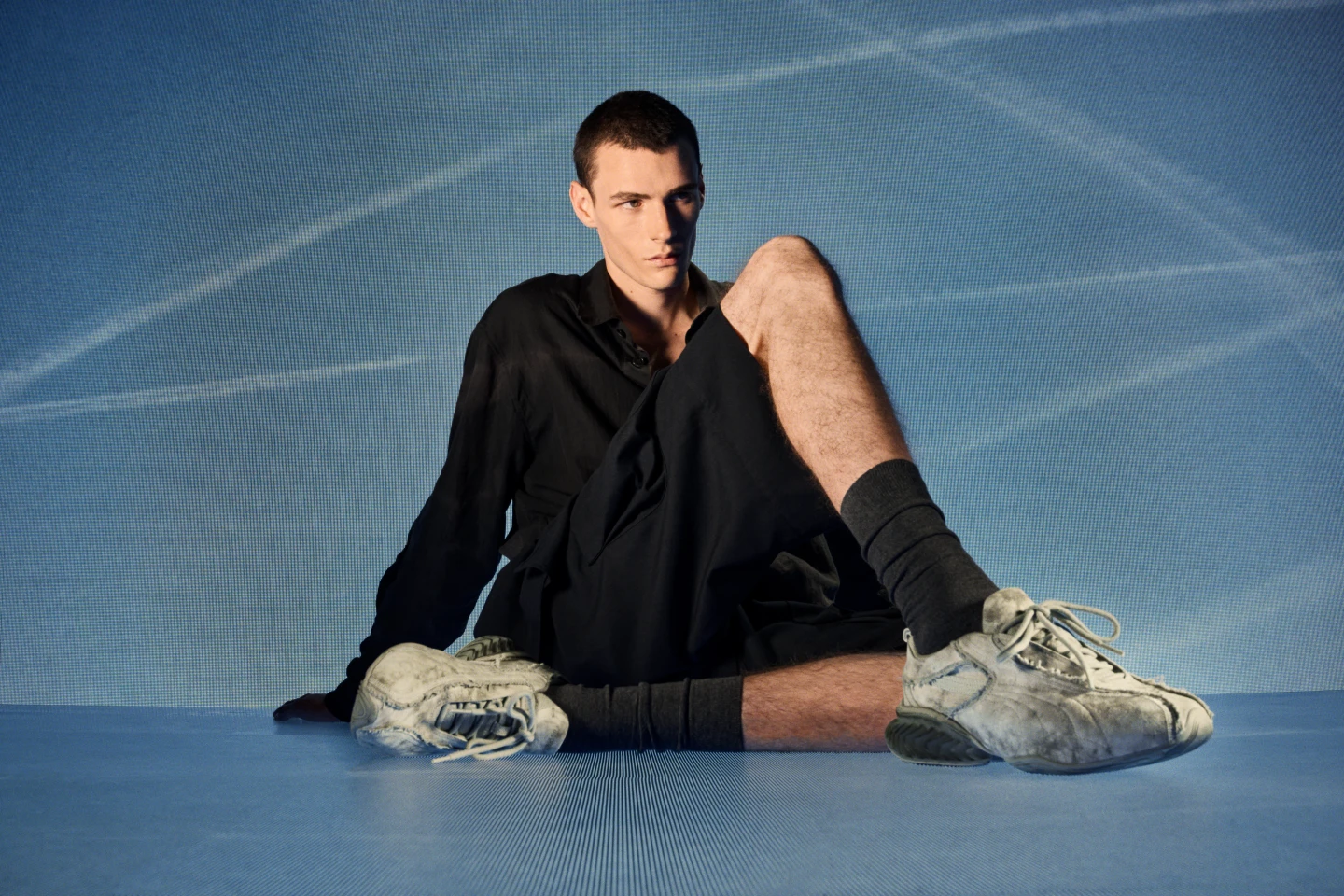
Balenciaga, Gucci, Prada and other fashion names show how trainers became luxury items in the section Dalla strada alle passerelle. What changed was more than price. A bulky sole beneath a delicate skirt or a sports shoe paired with tailoring challenges the old division between elegant and casual. Such combinations are familiar now, but they once seemed daring. The exhibition makes it easy to see that fashion rules are not fixed truths; they are conventions that people constantly change.
Take the practical lesson home without buying a new outfit. Perhaps you have a dress you rarely wear because it feels too formal. A simple trainer may make it right for an ordinary day. Perhaps your brightly coloured shoes seem difficult to combine. Let them become the star and keep everything else quieter. Good styling often means rediscovering the things you already own and finding new combinations rather than turning every inspiration into another shopping trip.
Even corridors of power changed
Power Play considers how trainers have appeared in offices, technology companies and public life. Sports footwear can suggest informality, accessibility or a contemporary outlook. But appearances are never the whole story. Wearing trainers does not automatically make someone approachable, just as polished leather shoes do not make someone distant. Clothing communicates through symbols, which is precisely why it is worth examining those signals instead of accepting them without question.
The sustainability question
The final section, Futuro sostenibile, explores new materials, circular systems and waste reduction. Companies including Fessura, Id.Eight, Steve's and Veja have contributed models connected with attempts to rethink manufacturing. Where does rubber come from? How long can a sole last? Can materials be repaired or reused? These questions are part of contemporary fashion. A green slogan is not enough on its own: durability, traceable production and real reductions in waste deserve attention.
Customers have a small role too. Looking after shoes, cleaning them, repairing them where possible and resisting the urge to replace perfectly good pairs may be sensible as well as affectionate. Not every design is built to last and not every repair is feasible, but that makes it even more important to think about quality before buying. A museum display can inspire a better question than 'What should I purchase next?': 'What do I already own that still deserves to be worn?'
How to visit
The Museo del Tessuto is at Via Puccetti 3 in Prato. It opens Tuesday, Wednesday and Thursday from 10 am to 3 pm, Friday and Saturday from 10 am to 7 pm and Sunday from 3 pm to 7 pm; it is closed on Mondays. Standard admission is listed as €10, with concessions and specific booking conditions to check at https://www.museodeltessuto.it/mostre/sneaker-revolution/ . The Prato Porta al Serraglio station is within walking distance, while Prato Centrale is farther away. Choose your train and visit time accordingly.
There is no need to rush through seven sections as though they were tasks on a list. Pick three pairs that make you stop: one you would have loved at fifteen, one you would never wear and one that raises a question. Talk about why. A good exhibition can change your mind about beauty and send you home with a memory rather than an urgent desire to buy. If it leads you to rediscover an old pair in the back of your wardrobe, perhaps you have found the most personal souvenir imaginable.
Find more fashion stories and places to explore in CHIARA!'s style and city-guide sections.
SOURCES AND FURTHER READING
Did this story touch your heart?
Share this story