THE POPE, THE VIENNA PHILHARMONIC AND A LESSON IN LISTENING!
Leo XIV meets the Vienna Philharmonic and speaks about beauty, peace and attention to others. Rome’s sacred music festival continues in its churches and basilicas.
Jump to what you need
Before musicians can play together, they need to listen. It sounds like a rehearsal-room rule, yet it belongs just as naturally in a family discussion, a work meeting or a conversation where we start preparing an answer before the other person has finished.
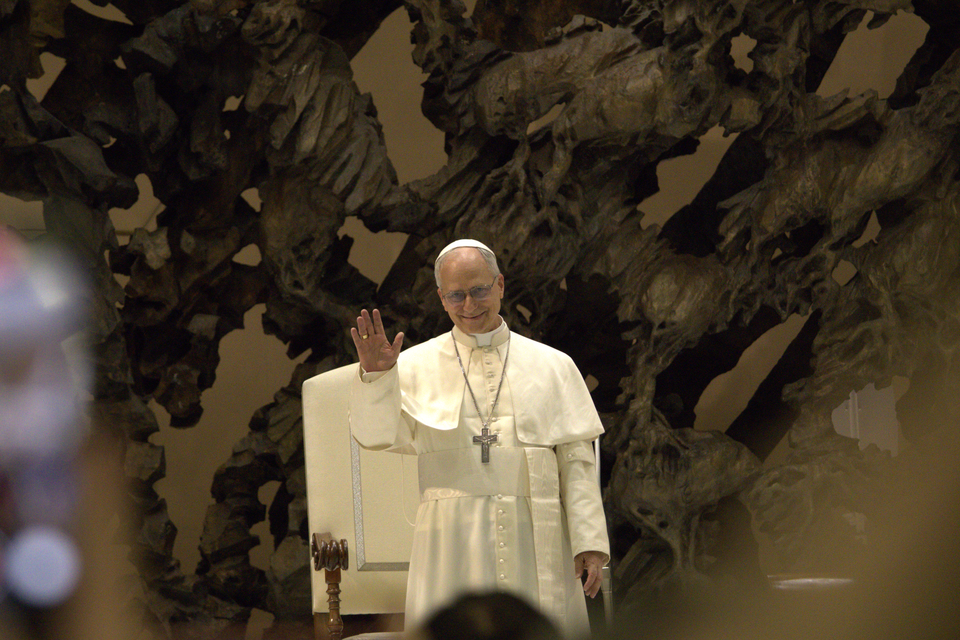
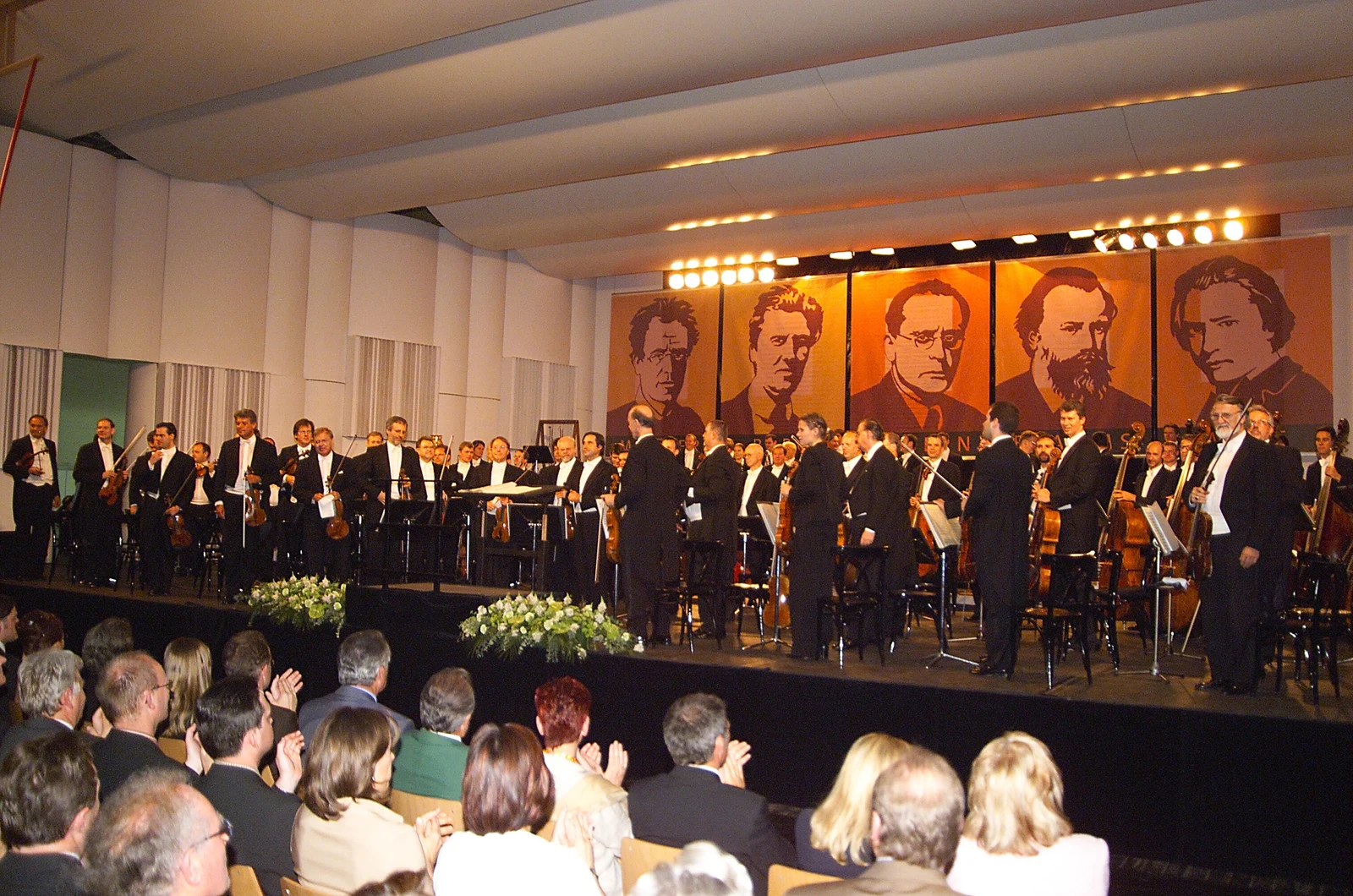
On Saturday 21 November, Pope Leo XIV received the Vienna Philharmonic in the Clementine Hall. His reflection reached beyond the musicians in front of him: music can help us make room for others and seek a shared harmony. In a world marked by conflict, that invitation has a very practical meaning.
Vienna comes to Rome with Mozart
The orchestra travelled to Rome for the 25th International Festival of Music and Sacred Art, organised by the Fondazione Pro Musica e Arte Sacra. This edition is dedicated to world peace and marks two anniversaries: four hundred years since the dedication of St Peter’s Basilica and eight hundred years since the death of St Francis of Assisi.
Saturday evening’s programme at St Paul Outside the Walls paired Mozart’s Coronation Mass K. 317 with Ave verum corpus K. 618 under Riccardo Muti. Joining the orchestra were Siena Cathedral’s Guido Chigi Saracini Choir, prepared by Lorenzo Donati, and soloists Rosa Feola, Nina van Essen, Giovanni Sala and Alexander Grassauer.
Every instrument has something to contribute
Leo XIV used the orchestra as an image of the human family. Different instruments bring recognisable sounds and distinct roles. A convincing performance depends on skill and on attention to what everyone else is doing.
This is a useful way to think about our relationships. A musician must notice another entry, shape a phrase and adjust the strength of a contribution. Knowing your own part still leaves the work of hearing the whole.
Outside a concert hall, the same attention can change a conversation. A family member may need time to express a concern clearly. A quiet colleague may be contributing without taking over the room. A friend may need us to remain present for a few minutes, without immediately offering a solution. Listening begins when we give that person some space.
Beauty leaves room for deeper questions
The Pope also reflected on beauty’s capacity to open people to profound questions and to the mystery of God. Music moves through joy, grief and hope, experiences we recognise even when we struggle to describe them.
Certain pieces become attached to a person, a place or a moment when we felt understood. Hearing them again can bring something back: an emotion, a memory or the beginning of a prayer.
You do not need to read a score to make room for that experience. Start with a few minutes of attention, a piece you have chosen and a willingness to listen without doing another task. Musical knowledge can enrich the details you notice; curiosity is already a good beginning. A first encounter can make you want to return.
Who are the Vienna Philharmonic?
The orchestra’s history begins with a concert conducted by Otto Nicolai on 28 March 1842. The Vienna Philharmonic operates autonomously and makes decisions through its musicians. Membership requires belonging to the Vienna State Opera Orchestra.
Behind the famous name lies shared responsibility for organisation as well as performance. That makes the orchestra’s identity especially interesting: the musicians help shape the institution they represent.
Welcoming them, Leo XIV recalled the great musical heritage associated with Vienna and the task of bringing it to present-day audiences. A work continues to find new listeners because people return to study, interpret and share it.
Rome’s remaining festival dates
The festival continues with the following appointments. Registration for the musical events is handled through the Foundation’s dedicated portal.
Sunday 22 November, 9pm · St Paul Outside the Walls, apse. The Escolanía del Escorial, the festival’s choir in residence, performs in honour of Pope Leo XIV. José María Abad Bolufer conducts; Father Pedro Alberto Sánchez is the chapel master.
Monday 23 November, 9pm · St Mary Major. Monteverdi’s Vespers of the Blessed Virgin brings together the Oxford Philharmonic Orchestra & Choir and His Majestys Sagbutts and Cornetts under Marios Papadopoulos. This event is fully booked.
Tuesday 24 November, 9pm · Sant’Ignazio di Loyola in Campo Marzio. A Mozart programme for the 270th anniversary of his birth features the Stiftsmusik St. Peter string quartet from Salzburg and soprano Ekaterina Krasko, directed by Peter Peinstingl.
Wednesday 25 November, 9.30am · St Peter’s Square. The calendar includes the Pope’s General Audience. This appointment is an audience, separate from the preceding evening concerts. All times are local to Rome.
Try a little listening today
For an event that still has places, open the registration portal, select the appointment and follow the access procedure. An evening in a basilica can offer time to step outside a busy routine and attend to something beautiful.
If Rome is far away, begin with the first movement of Mozart’s Symphony No. 40, performed by the Vienna Philharmonic and Muti in the listening selection below. This is a catalogue recording, separate from the programme of the Roman concert on 21 November.
Let a musical phrase reach its end. Follow the change as another instrument enters. Later, during a conversation, try allowing another person’s words the same space. A small pause can change the tone of a day.
Share the experience, including its silence
If you go with a friend, agree to give the music some uninterrupted time. Let it fill the space before discussing what you think of it. Afterwards, perhaps during a walk, tell each other which passage stayed with you. Your impressions may differ, and that difference can make the conversation more interesting.
For a first visit to a sacred music event, curiosity and respect for the shared setting are enough to begin. Leave time to find your place, silence your phone and follow the organisers’ instructions. Read any access information attached to your registration before travelling. These small preparations help everyone settle into the experience and allow attention to move from practical arrangements towards the music itself.
Music, faith and St Cecilia’s day
22 November is associated with St Cecilia, patron saint of music. Her story belongs to CHIARA!’s saints calendar. The Pope’s full address to the Vienna Philharmonic offers a fitting invitation to mutual attention.
The next time a piece of music stops you for a moment, give it that time. It may bring a question, a memory of someone to call or a desire to give thanks. An act of peace can begin with listening.
Source: Wiener Philharmoniker · Universal Music Group ↗
SOURCES AND FURTHER READING
Did this story touch your heart?
Psst… you’ll like this too!
Muti returns to Rome’s sacred music festival after 22 years
Read the story ↗Share this story