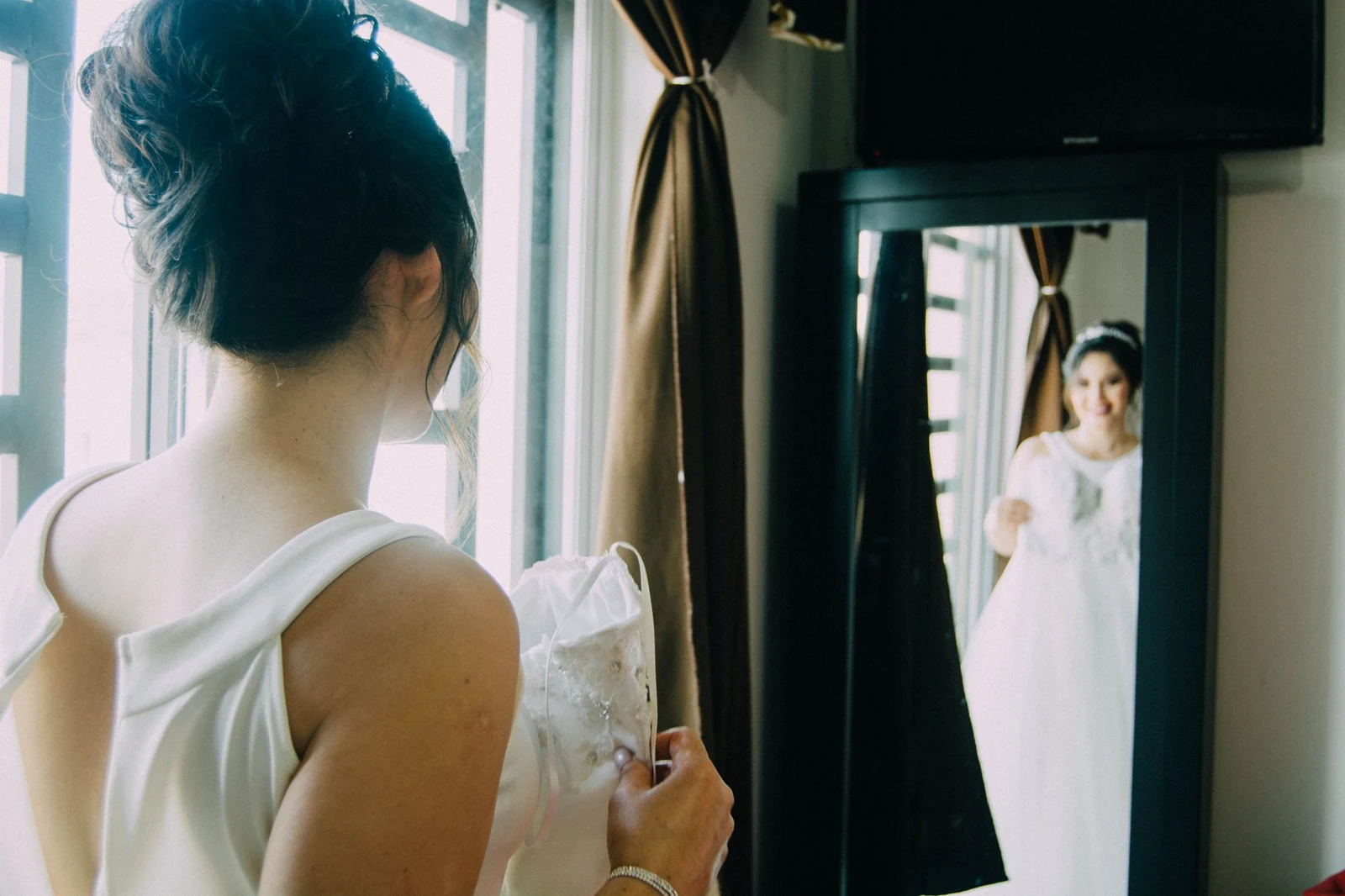
Bride of 2027: what colour is your yes?
From your favourite white to dusty rose and collection scarlet: real gowns, useful light checks and complete styling ideas.
In this article
- Real colours from real collections
- Choose white by comparison
- A complete ivory or champagne look
- Pink: decide on depth first
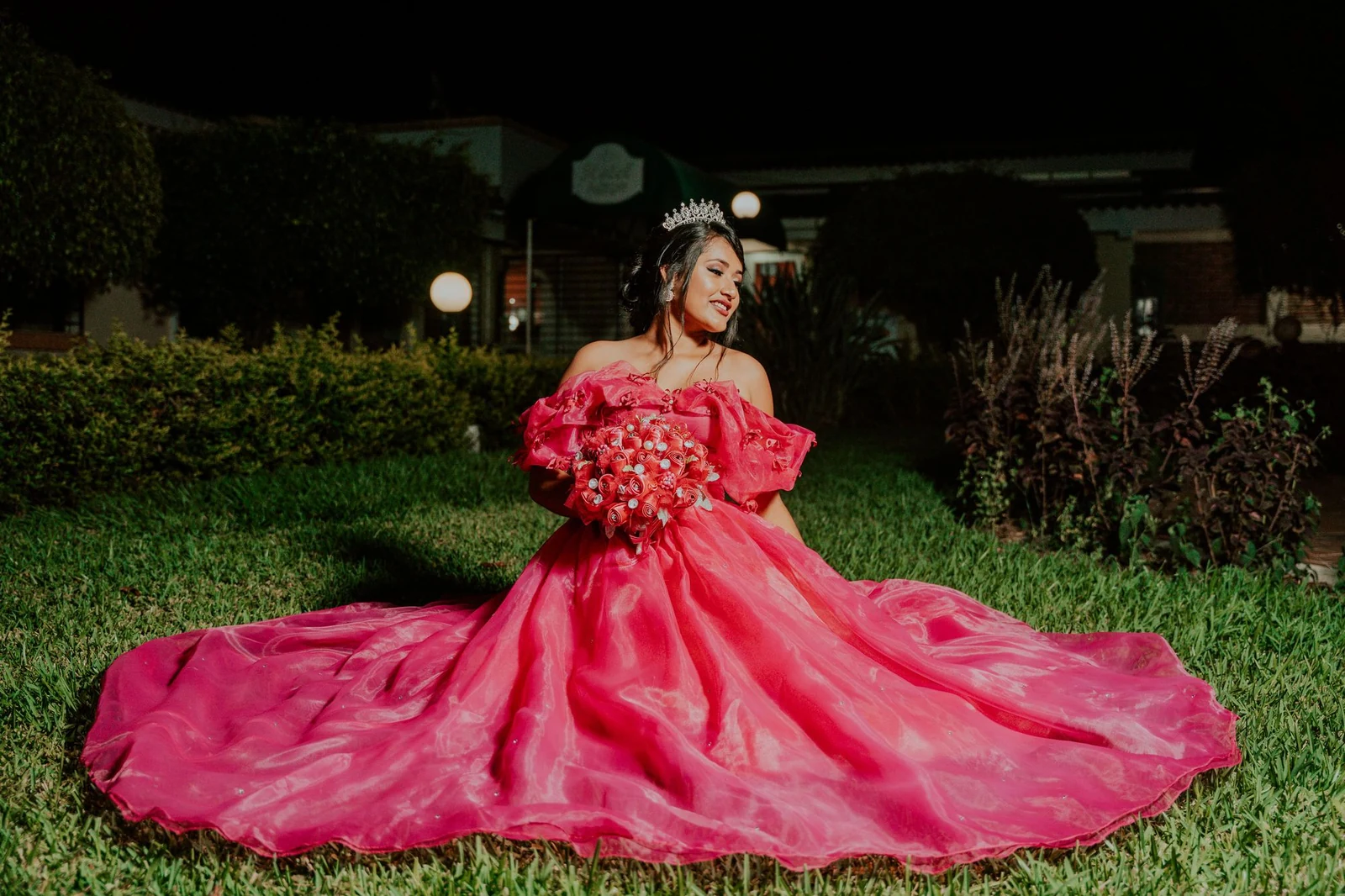
- Red: give the gown room
- A phone photograph has limits
- The room already has a palette
- Spring and summer: check the shade too
- Autumn and winter: plan the transition
- Colour is not a universal religious rule
- Ask about the exact colour variation
- Finish with a complete fitting
You ask for white, then open a swatch book and discover several versions: a cool one, a warmer one and another that looks different beside the veil. If you have always imagined pink, the question changes: can you find the right shade in the accessories too? There are concrete examples of colour in 2027 bridal collections, from ivory and champagne to pink and red. Start by deciding which complete outfit you want to wear, how it looks in your actual setting and which components can genuinely be ordered in the chosen variation.
Real colours from real collections
Pronovias Privée Lūcentia 2027 includes shades from soft ivory to pale champagne. Monique Lhuillier Spring 2027 has scarlet-and-nude lace Rouge; Fall 2027 includes dusty-rose Ryder and vintage-rose Sabine. These are verified collection examples, rather than a ranking of best-selling colours. Keep the precise name of the design. Asking for something like a photograph is less useful than specifying designer, season and colour variation. The boutique can establish whether the sample you try and the dress you order will be the same version.
Choose white by comparison
Place a veil sample beside the dress, together with the shirt your partner plans to wear. Look at them near a window and under indoor lighting. You may love the contrast and make it part of the look; if you wanted uniformity, it is better to discover the difference early. Commercial names are not universal swatches across brands. Have the colour and manufacturer’s code written into the order. A photograph of the label can also help you remember which variation you chose when comparing accessories at another appointment.
A complete ivory or champagne look
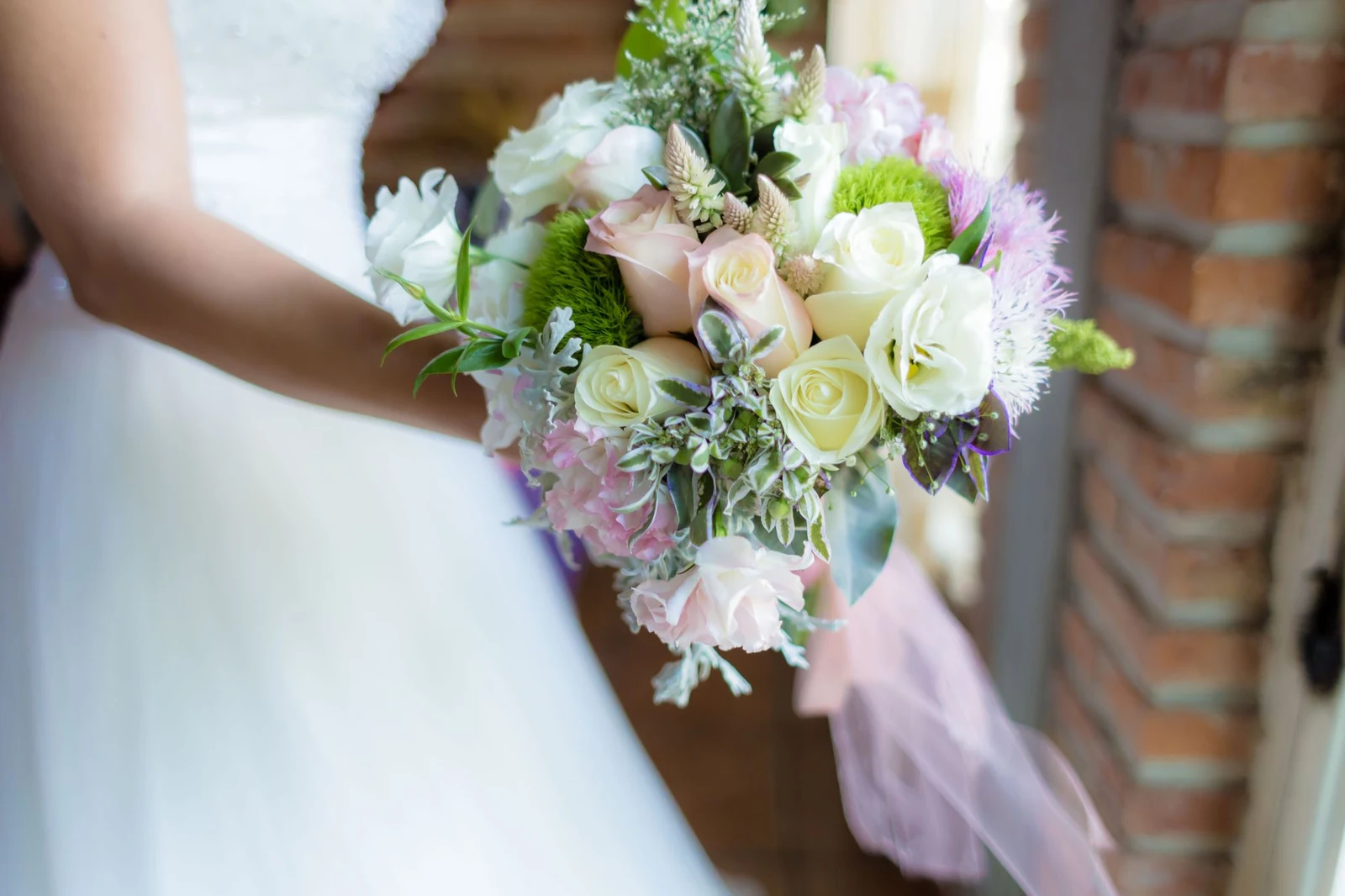
For warm ivory, try a veil from the same tonal family, a pale matte shoe and a piece of jewellery you already own. With champagne, compare a softly bronze shoe and a warm neutral, letting the dress supply the luminous surface. You do not need metallic reflections everywhere. Bring the pieces together and judge the full-length result. For the bouquet, ivory flowers and soft greenery provide a starting point. Add a stronger accent only if you want it in the photographs as well. These are styling proposals, rather than compulsory colour rules.
Source: Monique Lhuillier ↗
Pink: decide on depth first
Dusty rose creates a different impression from the palest blush. Put two small swatches beside the fabric, one warmer and one cooler, to see which direction you enjoy. Try a pink dress with a matte neutral shoe, simple earrings and an ivory bouquet containing a few deeper pink flowers. Another option is a burgundy shoe with one related colour accent in the bouquet. Take the shoe and swatches to the appointment, view them together beside a window and have the exact chosen colour entered on the order form. Keep a photograph of that complete combination.
Red: give the gown room
A scarlet dress can be the visual centre of the day. Build around it with a straightforward shoe, a small piece of jewellery near the face and a bouquet that leaves the bodice visible. If you want a veil, first ask which shades and lengths exist for the outfit. A substantial mantilla changes the whole silhouette; a birdcage veil concentrates attention around the face. Check what is included, what costs extra and what you can try with your chosen colour. The accessory in an official image may be a separately sold styling element.
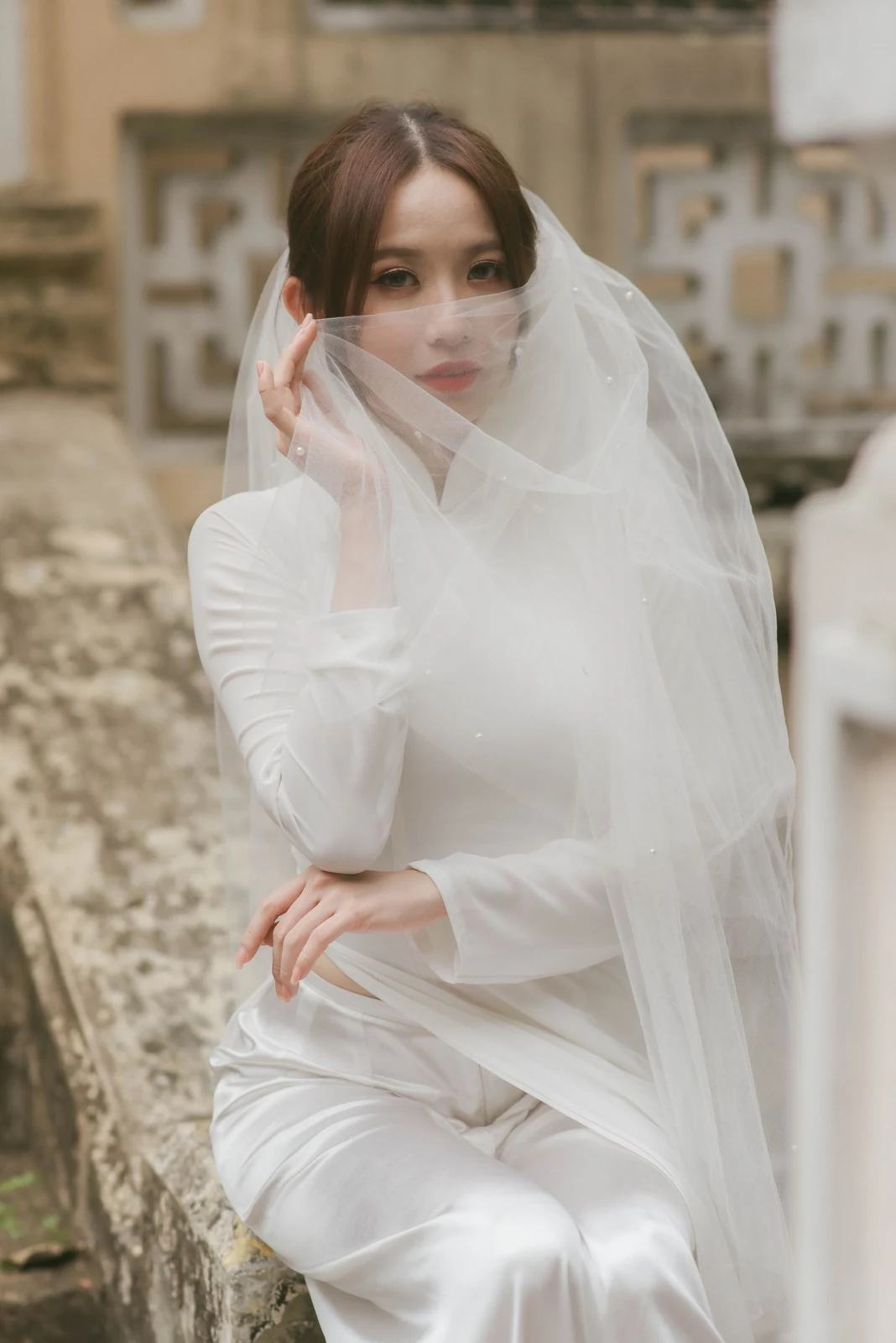
A phone photograph has limits
Different screens can display the same dress differently. Where possible, compare physical samples and images taken during the same appointment in the same light. Avoid changing exposure or adding filters before making the decision. Your photographer can help explain the overall effect in the venue without promising identical colour in every image. Place the fabric beside your hair, skin and accessories. Personal preference deserves more weight than automatic rules assigning a particular shade to a complexion. The useful question is whether you enjoy the whole outfit when you see it yourself.
The room already has a palette
Before ordering, look at a photograph of the room where you will celebrate. Floors, walls, curtains and lighting are already there and will appear around the dress. In a richly decorated setting, a simpler table can leave room for people. In a pale interior, flowers can bring a stronger accent. Dress, napkin and wedding favour do not have to match exactly. Connect them through a tonal family or shared material. Bring a swatch to the florist and ask for a proposal suited to the actual space rather than a completely different inspiration photograph.
Spring and summer: check the shade too
For a spring wedding, photograph a sample beside flowers available for your test, without treating those flowers as a guarantee of future seasonal supply. In summer, see the dress in shade as well as strong light: part of the reception will take place there. Colour does not determine how warm the construction feels, so inspect fabric and lining too. If the celebration moves from garden to room, try the lightweight outer layer or wrap with the same care you give the veil. It belongs to the outfit during those transitions.
Autumn and winter: plan the transition
A champagne dress might work with pale outerwear and warm accessories; a pink gown with a cape from the same family or a deliberate contrast. Compare the tones in afternoon daylight and the reception’s evening lighting. Arrange somewhere to remove and store the outdoor layer. If it appears in arrival photographs, treat it as part of the dress. Changing shoes can match the colour or simply disappear beneath the skirt. Check both options with the hem. Practical planning helps a considered colour choice remain coherent from arrival to the evening celebration.
Colour is not a universal religious rule
For a church wedding, discuss the complete outfit and any local guidance with the parish. Neither traditional photographs nor fashion runways establish the rules for your ceremony. For a civil wedding, check the setting and agreed formality. If you are suggesting a guest palette, present it as the couple’s preference and make it workable. A colour family gives people more freedom than an exact code. Clear communication allows guests to use something they own and keeps the request from becoming an unnecessary wardrobe problem. The choice can remain welcoming as well as visually thoughtful.
Ask about the exact colour variation
A coloured version can have different commercial conditions from the sample. Do not assume either a surcharge or a saving. Ask for the price, ordering time, customisation options, possible alterations and accessory availability for the variation you want. Where there is no public price, you need a quotation rather than a figure borrowed from a different dress by the same designer. Record the dated response. Colour belongs alongside fit and the complete total in the decision. This is how an appealing picture becomes a specific purchase you can understand and plan for.
Finish with a complete fitting
Before collection, put on all the components and take front and back photographs. Check the ordered veil, the relationship between shoes and fabric, and the space the planned bouquet leaves around the dress. Then stop chasing the perfect shade on other people’s phones. You have seen and tried a complete outfit. It might be white, pink or red. What matters is arriving in the day with the uncomplicated feeling that you recognise yourself, and with the practical confidence of knowing which pieces make your chosen look work together.
Return to the 2027 wedding guide to connect outfits, styling and planning. The Wedding Special also includes the four seasonal guides.
SOURCES AND FURTHER READING
Did this story touch your heart?
Share this story