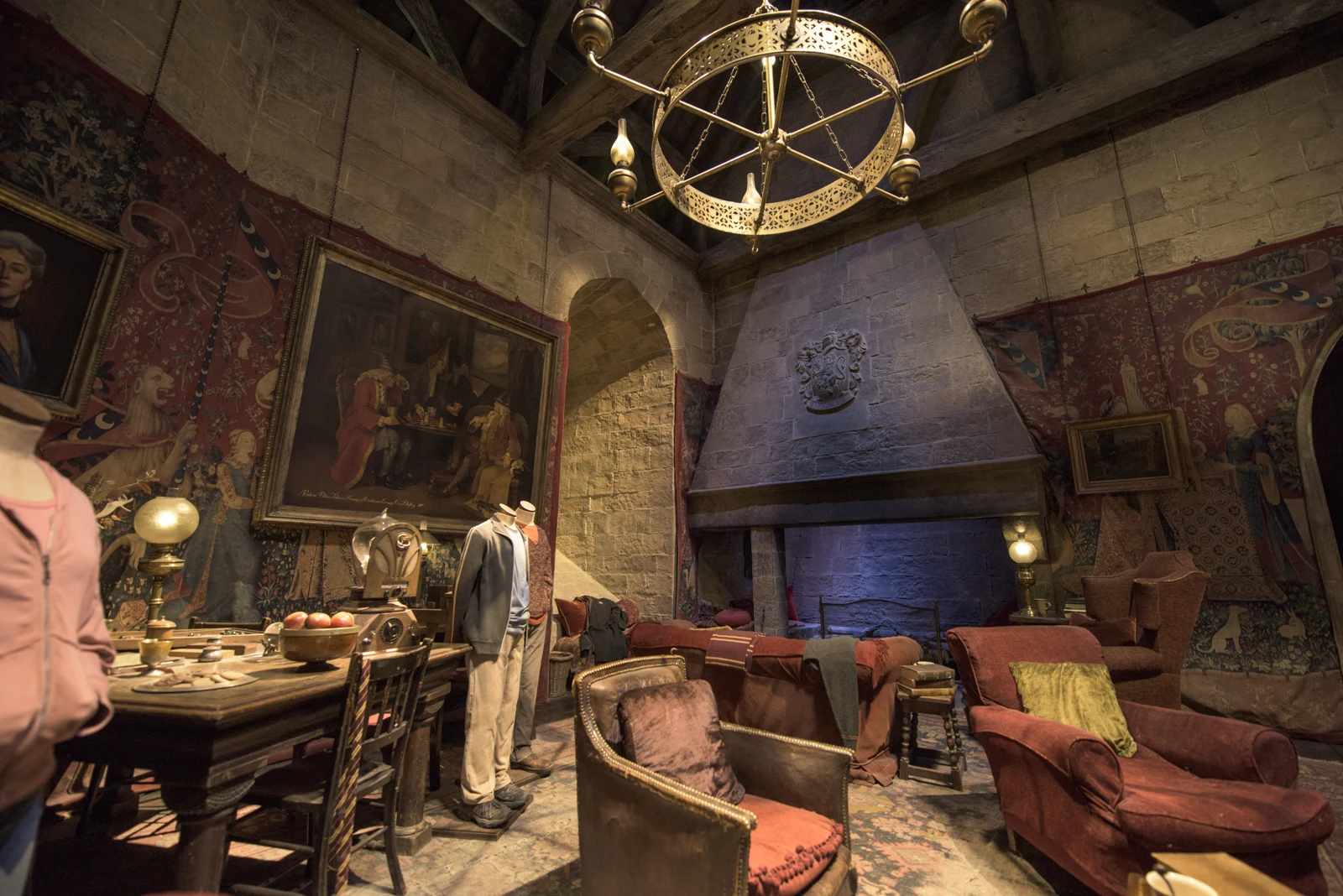
Harry, Hermione and Ron, then and now: six actors and a friendship beginning again
Daniel Radcliffe, Emma Watson and Rupert Grint remain the stars of the films. Dominic McLaughlin, Arabella Stanton and Alastair Stout begin a new adventure in HBO’s series. Here is how to get to know both trios.
Jump to what you need
First, a little reassurance for the heart: the Harry we remember is still ours. Daniel Radcliffe remains the boy we watched arrive at Hogwarts in the films, Emma Watson the Hermione of our first movie marathon, and Rupert Grint the Ron we hoped to meet again on the train. HBO’s series opens another door into the story: Dominic McLaughlin plays Harry, Arabella Stanton is Hermione, and Alastair Stout is Ron. The starting point is once again Philosopher’s Stone. Their first season arrives on 25 December 2026 on HBO Max, including Italy. For viewers, that means two adaptations to explore, each with its own identity.
Harry: Daniel Radcliffe and Dominic McLaughlin
With Radcliffe, we know a complete journey: eight films, the character growing up, and scenes we can recognise with the sound turned down. McLaughlin is meeting audiences at the beginning of a television adventure. That difference matters. Comparing a child just starting out with an actor whose work we remember across ten years means comparing very different amounts of material. To meet Dominic beyond the glasses and scar, there is also Grow, a family comedy presented in 2025. Its cast includes Nick Frost, the new Hagrid. That is a useful connection and a chance to see a young actor working in another story.
The interesting questions to take into the first episode concern Harry himself. How does the story show his loneliness before the letter? How much room does it give the discovery of a world where his name means something? Those are questions about storytelling, and they help us watch a performance. A haircut, a pair of glasses and an isolated frame describe only a small part of the work. Voice, silences and the relationship with other actors matter too. The first viewing can simply be the pleasure of noticing a new choice, with enough time to understand how it works within the scene.

Hermione: Emma Watson and Arabella Stanton
Watson gave a cinematic face to a determined, knowledgeable girl who learns to share her abilities with her friends. Stanton takes on that protagonist in another production, bringing an important experience with her: she played Matilda in the West End musical. Theatre and television require different tools, but both involve listening, precision and working with other performers. That is a meaningful starting point for introducing her. Appearance and resemblance to a photograph from twenty-five years ago tell us much less about the possibilities a new adaptation offers. Getting to know an actor means allowing the work to become visible through complete scenes.
There are three simple things to watch in Hermione. How does she enter a conversation? How does she react when she knows the answer before anyone else? How does her way of being with Harry and Ron change when knowledge becomes something they need to share? These details make the growth of friendship interesting. Hermione is more than a recognisable hairstyle or a famous line. Her energy comes from the relationship between ability, insecurity and the desire to find a place. Watching that relationship is more rewarding than judging hair, and it gives a new performance room to find its particular shape.
Ron: Rupert Grint and Alastair Stout
Grint accompanied Ron from his arrival at Hogwarts to the end of the film saga. Stout plays him at the beginning of the television series. Introducing him through the character provides the clearest starting point: Ron comes from a large family, has an everyday familiarity with the magical world that Harry is still discovering, and brings a valuable perspective to the group. We do not need details of a very young performer’s private life to understand the challenge. We need scenes, the relationships with the other two leads, and time to see how their friendship forms, changes and starts to matter.
Ron can too easily be reduced to a funny moment. Yet a trio works when everyone has something to contribute and something to learn. During a viewing, we can follow that exchange: one knows the customs of Hogwarts, another has studied the answers, and another finds himself in the spotlight for the first time. The fun also comes from their different starting points, their misunderstandings and the way they learn to trust. Give Stout the space of a full scene, then. A few seconds in an edited clip cannot contain a whole character or explain every choice an actor makes.
Six names to remember
The guide is straightforward. In the films, Harry is Daniel Radcliffe, Hermione is Emma Watson and Ron is Rupert Grint. In the series, Harry is Dominic McLaughlin, Hermione is Arabella Stanton and Ron is Alastair Stout. Two different groups play the same characters. The new adaptation begins with the first novel. It does not continue the films’ storyline or offer a ninth cinema instalment. That distinction helps in conversations with someone who has only glimpsed a poster. You can approach the series through the films, through the books, or as a first-time visitor learning what Hogwarts means alongside Harry.
A visual comparison that helps
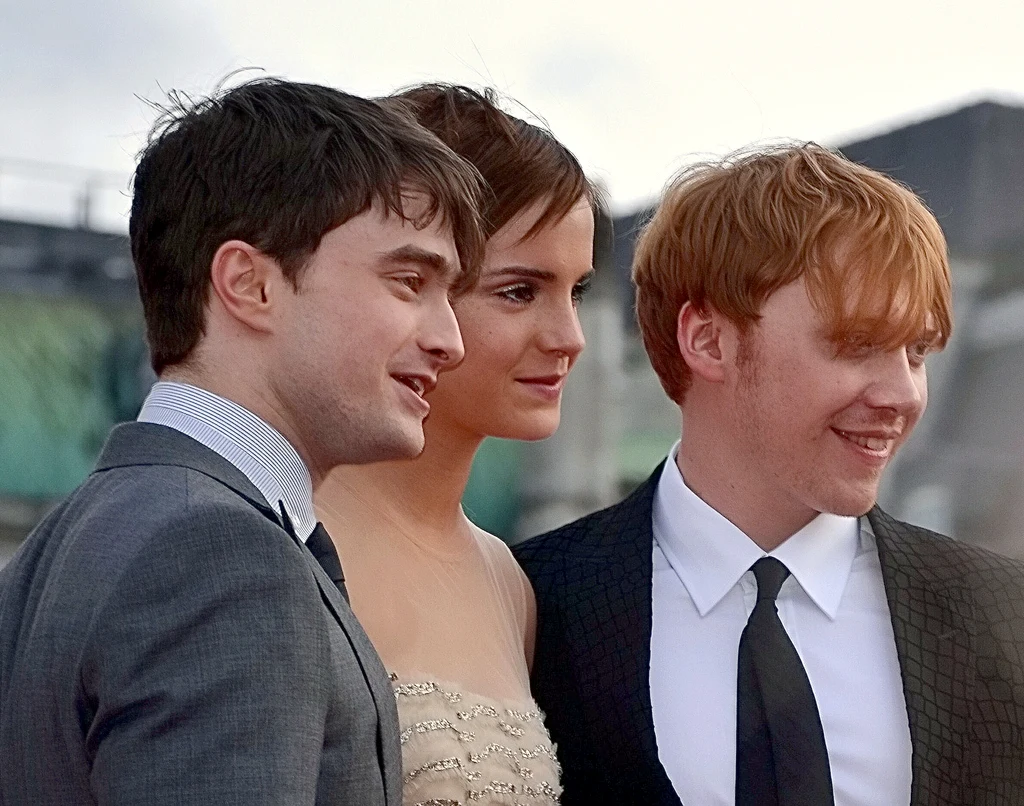
When placing two pictures together, choose equivalent moments: Harry discovering Hogwarts, Hermione making her first connections, or Ron on the train. A photograph of an adult actor beside a child’s portrait mainly tells us that time has passed. Costumes, lighting and hairstyles also belong to each production’s design. We can enjoy recognising new choices without ranking people. The most revealing detail may be a reaction, a hesitation or the way someone looks at a friend when trust becomes necessary. Those details connect performance to story. They also leave room for an image to be beautiful without making it carry an entire argument.
A familiar film and a fresh first viewing
A short route into the new series is enough: revisit Philosopher’s Stone, reopen the novel’s first chapters, and approach the episode with curiosity. The film offers a specific memory; the book brings back the pace and passages of the written story; the episode reveals how the new team works. There is no need to tick off every scene. Afterwards, choose one moment that moved you, one that made you smile and one new detail. It is a good family conversation, giving those who know everything and those arriving for the first time something equally useful to share.
The original stars have their own journeys
The series does not erase careers beyond Hogwarts. Radcliffe has worked across cinema, comedy and theatre; Watson played Belle in Beauty and the Beast and Meg in Little Women; Grint appeared in the thriller Servant. Seeing them in different work makes the distinction between actor and character clearer. We can love them at Hogwarts and follow them elsewhere, just as we can welcome the new performers without asking them to reproduce every familiar gesture. The pleasure of having both adventures is simple: memory stays with us, curiosity grows, and another train is ready for a new generation of passengers.
Keep exploring Hogwarts!
SOURCES AND FURTHER READING
Did this story touch your heart?
Psst… you’ll like this too!
Where are the Harry Potter actors now? Broadway, books and the projects worth discovering
Read the story ↗Share this story