The giraffe born live in front of almost eight thousand viewers is a girl
Tessa gave birth at Cincinnati Zoo on 16 November. Cameras followed the arrival and the calf’s first attempts to stand. She is now spending her early days with her mother, away from passing visitors.
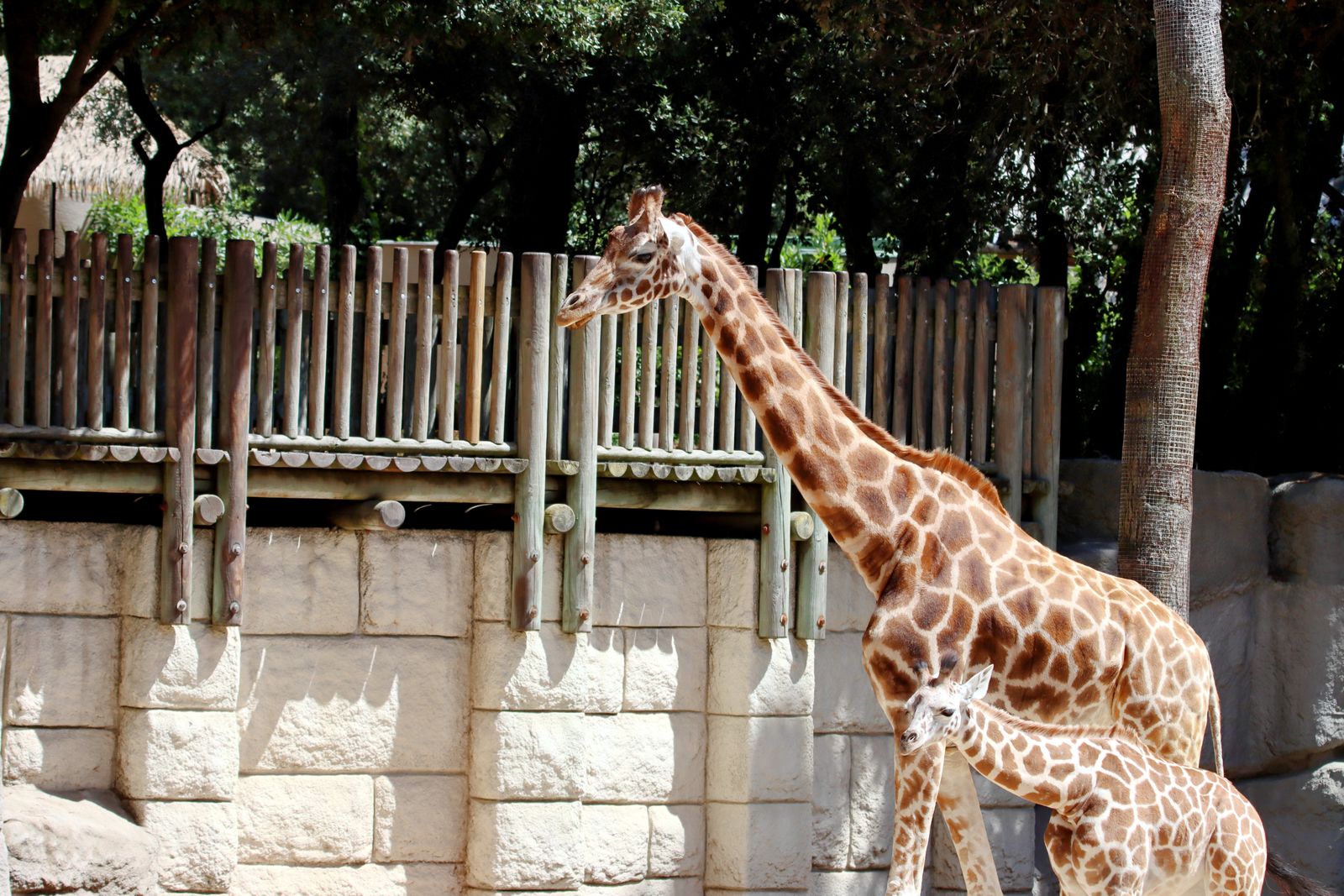
Adult giraffe with calf — archive photograph: patrice schoefolt / Pexels.
Almost eight thousand people were still watching when Tessa gave birth, shortly before midnight on Monday 16 November. It was Cincinnati Zoo’s first birth livestreamed to the public: people watching from home saw a giraffe arrive and witnessed her earliest movements.
Confirmation came on 18 November: the newborn is female. She is doing well and spending these first days with Tessa in a sheltered area. She is her mother’s fifth calf and the eighteenth giraffe born in the zoo’s history.
The first feeds, behind the scenes
The calf took a little time to move and stand. The veterinary team observed nursing and interactions with her mother: two encouraging signs as they followed the start of their life together.
To reduce disturbance, the windows into the indoor habitat were covered. Cameras make it possible to watch while respecting the quiet of these early days.
Watching a birth on a screen means waiting for one movement, then another: an attempt to rise, the moment the legs support the body. The closeness created by the images can make it easy to forget that assessing an animal’s condition requires experience and direct observation. For viewers, the livestream is above all a chance to understand those first behaviours better.
Tessa and Zeke: a pairing followed for months
Tessa’s pregnancy was announced in March. The father is Zeke, described at the time as a five-year-old male. Their pairing was recommended by the Association of Zoos and Aquariums’ Giraffe Species Survival Plan, which coordinates giraffe management across participating zoos.
The choice takes account of the genetic characteristics of the managed population. For Tessa and Zeke, this new combination of family lines was one reason the pregnancy mattered to the programme. For the staff caring for them each day, the wait began long before the cameras were switched on.
How a name will be chosen
Once the calf’s sex was confirmed, the zoo launched a special initiative through its symbolic ADOPT programme. Participants had the chance to be selected to suggest her name, subject to guidelines set by the zoo.
The announced entry period ran from 18 to 24 November, so it has now ended. The name and subsequent updates can be followed through Cincinnati Zoo’s official channels. Adoption is symbolic: it supports animal care and does not mean taking custody of the giraffe.
Why giraffes arrive with a long drop
Female giraffes give birth standing up. The calf therefore reaches the ground from a height that can approach two metres. It is a startling sight, especially the first time you see it, but it is part of giraffe birth. Pregnancy lasts around fifteen months.
A newborn is already extraordinarily tall by human standards, reaching around 1.8 metres. After birth, the calf must quickly learn to support itself on four legs and reach its mother to drink. In those first hours, attempts, slips and renewed efforts can all be seen: coordination develops through these movements.
In the wild, standing quickly is vital for survival. Young giraffes are exposed to predators on the savannah, and mothers must protect them while continuing to feed themselves. The size of an adult giraffe can make it easy to overlook the vulnerability of these early stages.
Calves also grow up together
During their first weeks, calves may begin gathering in groups often called crèches. Some females stay near the young while others move away to feed. Mothers return to nurse; milk remains important even as calves begin sampling vegetation.
These behaviours help explain why following a birth means observing over time. Standing is only one early step. Feeding, growth, movement and relationships with other animals follow. Information gathered at each stage helps build a better understanding of what young giraffes need.
Masai giraffes and the protection of their habitat
Tessa and her daughter are Masai giraffes. Their patches have irregular, jagged edges, often compared with the shape of vine leaves. Wild populations live mainly in Kenya and Tanzania, facing threats from poaching, habitat loss and fragmentation.
Fragmentation occurs when usable habitat is divided into separate pieces. For animals that need to move to find food and encounter others, keeping suitable areas connected is part of protection. A population needs space and continuity as well as births.
In Tanzania, the Wild Nature Institute follows thousands of giraffes through photographs of their coats. The arrangement of patches allows individuals to be recognised and found again in later surveys. These encounters help researchers reconstruct births, survival and movements.
Following the same animals for years reveals where populations are growing and where they face difficulties. The data guide habitat protection, anti-poaching efforts and work with local communities. Cincinnati Zoo has partnered with the Wild Nature Institute to protect giraffes in East Africa since 2014.
This female’s birth has drawn attention to one recognisable animal whose name thousands of people are now waiting to learn. It is also an opportunity to follow giraffes beyond a birth video: to watch how they grow, understand the space they need and discover the work of the people protecting them in the wild.
SOURCES AND FURTHER READING
- Cincinnati Zoo — Tessa gives birth
- Cincinnati Zoo — Female calf and naming initiative
- Cincinnati Zoo — Tessa’s pregnancy
- Giraffe Conservation Foundation — Baby giraffes
- Giraffe Conservation Foundation — Masai giraffe
- San Diego Zoo Wildlife Alliance — Giraffe development
- Wild Nature Institute — Masai Giraffe Conservation Project
Did this story touch your heart?
Share this story